Timber
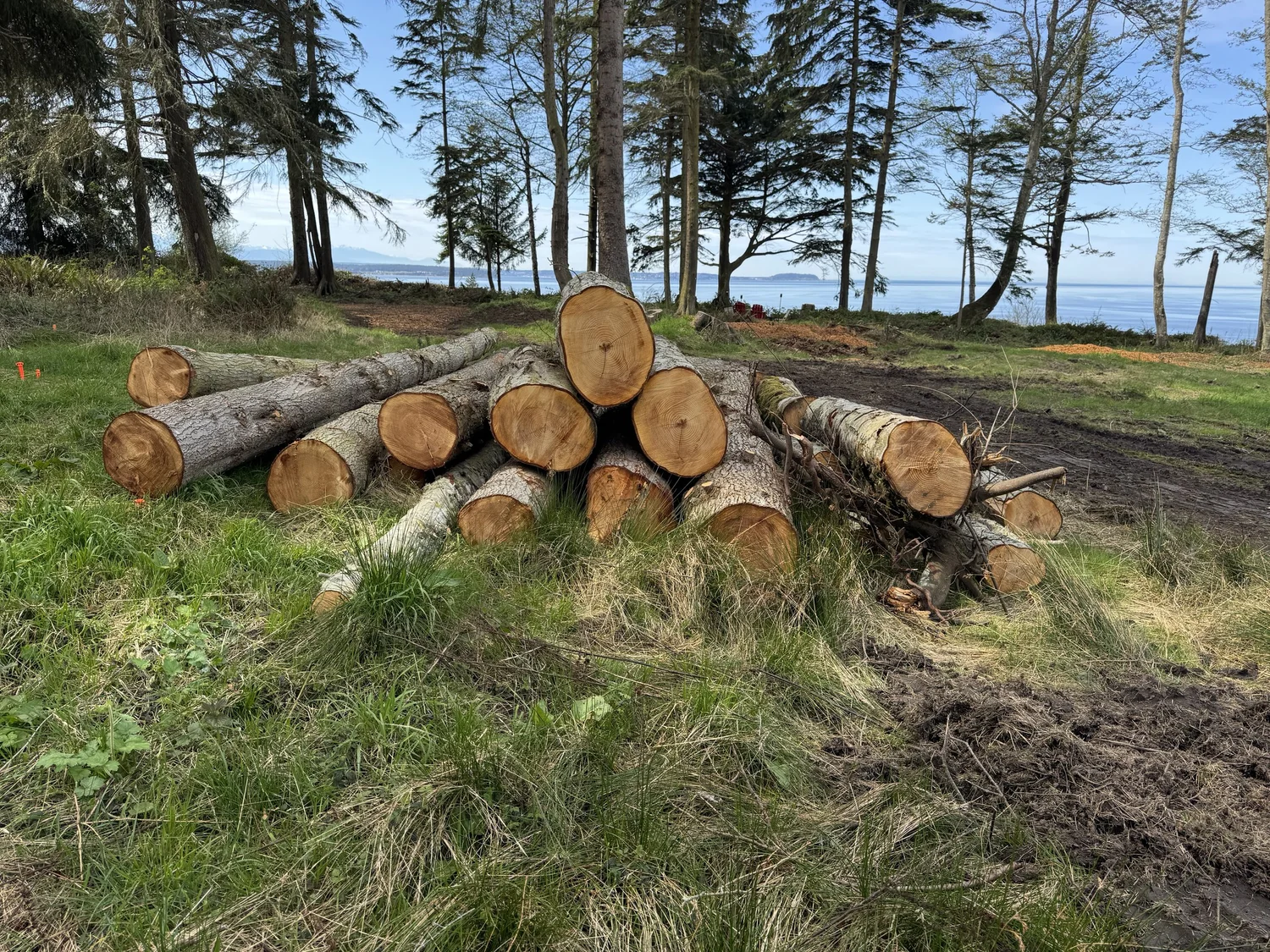
There were 130 logs on the ground when we got here.
A previous clearing project, years before us, had taken down a small forest's worth of trees and left them. We don't know exactly why — maybe a permit issue, maybe a change of plans, maybe the easier thing in the moment. The logs sat. They got mossy. The land grew up around them. By the time we walked the property, they had become part of the topography — features rather than waste, even if no one had decided what to do with them yet.
We hadn't either. For the first couple months, we just walked past them.
The arborist came in February. He had two jobs. The first was to look at the standing trees and tell us which ones were dangerous, which ones were dying, and which ones — honestly — were going to be a problem for any future structure we tried to build on this land. We had to make some choices.
The second job was the log deck. He took one look and gave us his professional recommendation: chip everything.
We needed Dave.
What Alex saw — and what the arborist didn't — was that we had a lumber yard sitting on our own property. Spruce. Alder. Hemlock. Some of it was rotten. Some of it was beautiful. The work was in telling them apart.
We asked the arborists to slow down. We had them carefully sort: anything sound went into a pile for milling, anything rotten or damaged went to the chipper. They did the same with the new trees they took down. Every tree got the same evaluation, regardless of when it had fallen. By the end, we had two piles: one bound for a mill, one bound for ground cover.
Dave is a lumber nerd of the best kind — the kind who has a portable mill, knows the personality of every species in the Pacific Northwest, and gets visibly happy when you ask him a question about board feet. Alex found him through the kind of word-of-mouth network that exists for these things on the island. He drove his mill onto the property and worked for months each weekend through the spring — working through our log deck one piece at a time.
Almost nothing on this part of the project will go to waste. The salvaged logs and the newly felled trees are becoming, between them, the material for nearly everything we plan to build at human scale: the treehouse will be wrapped in wood that grew on its own land. The garden shed, probably the same. Cabinetry, eventually. Tables. The guitars Alex hasn't built yet. Whatever the rotten wood became went back into the ground as chips, spread across the trails and garden.
The land is generous. So are the people who know how to work it.
The mill is still running on weekends. The boards are stickering up under tarps. The drying takes time — two to three years, depending on the cut.
So we wait. The mill, the boards, the drying, the wait. It's island time.
Dave is the best kind of professional — the kind who builds something extra when you aren't looking. We'll show you what he's been up to soon.
Also…Alex is up to something. We'll tell that story when we get there.